When the Sky Turned Brown: Lessons from Phoenix's Unprecedented Twin Haboobs
Living in Phoenix means you learn to read the sky. Most afternoons in the summer, you watch the clouds build over the mountains and you know a monsoon is coming. But nothing I had seen in twenty years of Arizona living prepared me for the day the sky turned a solid wall of brown from two directions at once. That was the day of the unprecedented twin haboobs, and it changed how I think about home maintenance forever.
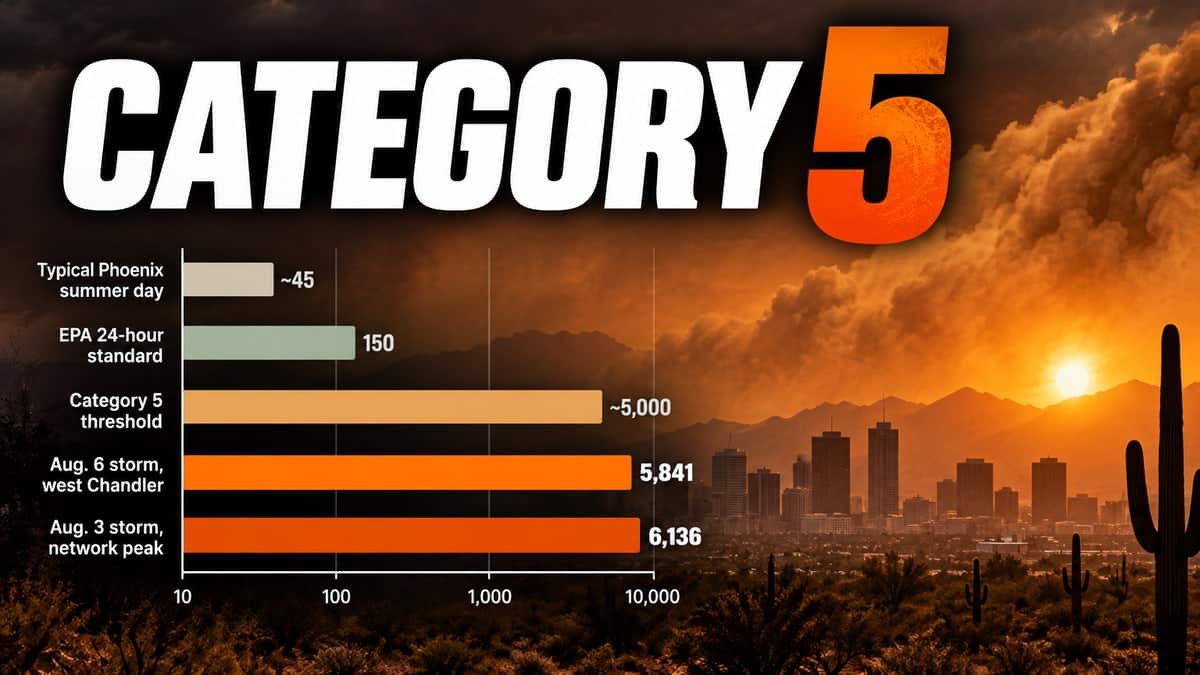
A haboob is a massive dust storm caused by thunderstorm downdrafts. They are common enough in the Sonoran Desert that locals have adopted the Arabic term as casually as they say "monsoon." But two Category 5 haboobs colliding over a major metropolitan area is not something the weather records had ever documented. The first swept in from the southeast, carrying dust from the agricultural valleys south of Phoenix. The second, even larger, rolled in from the northwest, dragging sand and silt from the dry lake beds out near the California border. When they met over the city, the air became a brown soup so thick you could not see your own hand in front of your face.
The aftermath was not just a matter of sweeping porches and washing cars. For homeowners, the unprecedented twin haboobs presented a maintenance crisis that exposed weaknesses in even well-kept houses. The sheer volume of dust that entered homes through gaps nobody had thought twice about was staggering. People found fine brown powder inside kitchen cabinets, inside closets, inside the electronics of their refrigerators. The dust intrusion was so thorough that it took weeks for some families to stop finding grit in their bedding.
What Two Category 5 Storms Did to Phoenix Homes
When you talk about a Category 5 haboob, you are talking about wind speeds that can lift gravel and whip it against house siding with enough force to strip paint. Two such storms hitting back to back, or nearly simultaneously, meant that the first storm deposited a layer of abrasive dust on every surface, and the second storm used that dust like sandpaper. Home exteriors that had looked fine in the morning showed visible wear by evening. I saw houses where the exterior paint had been scoured down to the primer on the windward side. Garage doors that had operated smoothly for years suddenly jammed because dust had worked its way into the tracks and rollers.
The wind damage was not limited to aesthetics. Several neighbors reported that their garage door openers stopped working entirely because the fine grit had fouled the limit switches. One friend found that the dust had infiltrated the weather stripping around his garage door so completely that the rubber seal no longer made contact with the concrete floor. He had to replace the entire bottom seal, and even then, it took three rounds of cleaning to get the track smooth enough for the door to close properly.
The Quiet Damage Nobody Talks About
The most insidious effect of the unprecedented twin haboobs was what happened inside the walls and ductwork. HVAC systems became dust pumps. The air filter in a typical Phoenix home is designed to catch pollen and the occasional tumbleweed seed, not the ultra-fine silt that a haboob carries. Many systems were overwhelmed within hours. I spoke with an HVAC technician who said he had never seen so many clogged air filters in a single week. Some units had dust so deep in the blower motor bearings that the motors burned out. The cost of replacing those motors ran into thousands of dollars for some homeowners, and that was before they dealt with the dust that had settled inside the ductwork itself.
Window seals that had been adequate for normal monsoon dust proved completely insufficient. The pressure differential between the inside and outside of a house during a Category 5 wind event can be dramatic enough to pull dust through gaps that are not even visible to the naked eye. Caulking that had cracked or shrunk over the years became open pathways. I found dust on the sill of a window that had been closed and locked for months, the seal having failed in a way that only the extreme wind and dust load could expose.
Roof Maintenance After a Major Dust Event
Roof maintenance is one of those tasks that Phoenix homeowners tend to put off until the rainy season reveals a leak. But the twin haboobs made it clear that the roof is the first line of defense against dust intrusion. The wind-driven dust piled up in roof valleys and behind parapet walls, and when the first real rain came a week later, that dust turned into mud that clogged downspouts and caused water to back up under tiles. Several homes in my neighborhood developed ceiling stains from water that had no way to drain because the dust had turned into a cement-like plug.
If you live in Arizona and you have not checked your roof vents and turbine vents since the last big dust storm, you should. The fine dust can get into the bearings of roof-mounted equipment and cause premature failure. I had to replace a bathroom exhaust fan that had been seized by dust that entered through the roof cap. The fan had only been installed two years earlier.
How to Recover When the Dust Settles
The first thing to do after a major dust event is to change your air filter. Not check it, not tap it out, change it. The fine particulate that a haboob carries will clog a standard fiberglass filter in hours, and running your HVAC system with a clogged filter just recirculates dust through your house. If you have a high-efficiency filter, you still need to replace it. The dust load from two Category 5 storms is beyond what any residential filter can handle without losing airflow.
Next, inspect every window seal and door seal in the house. Weather stripping that looks fine visually can be compressed or deformed by the pressure of the wind, creating gaps that will let dust in during the next storm. Run your finger along the seal and feel for any place where the rubber has lost its spring. Replace any section that feels soft or flattened. Caulking around window frames and door frames should be checked for cracks. If you can see daylight through a crack, you have a dust path. A tube of good exterior caulk costs less than ten dollars and can save you hours of cleaning.
The exterior of the house will need attention. The abrasive action of the dust can leave a film that actually holds dirt against the paint. A simple garden hose will not remove it. This is where a pressure washer becomes essential. A pressure washer with the right nozzle and pressure setting can clean the dust and embedded grit off house siding without damaging the paint. But you have to be careful. Too much pressure, or a nozzle held too close, can strip paint that was already weakened by the sandblasting effect of the storm. A soft wash technique, using a wider spray pattern and lower pressure, is safer for homes that have already taken a beating from the wind.
I have seen people try to pressure wash their garage doors after a dust storm and end up forcing water past the seals into the garage itself. The key is to work from the top down, keeping the nozzle at a consistent distance, and rinsing the surface before you scrub. If the dust has bonded to the paint, a mild detergent applied with a soft brush and rinsed with a pressure washer at low pressure will usually do the job without damage.
Preparing for the Next One
Phoenix will see more haboobs. The climate patterns that produce them are not going away. The unprecedented twin haboobs were a wake-up call for many homeowners who had never thought about dust damage as a serious threat. But the lessons are simple. Keep your air filters fresh. Inspect your weather stripping and caulking every spring. Make sure your roof drains are clear before the monsoon arrives. And if you own a pressure washer, learn how to use it safely on your home exterior. A little maintenance now can prevent a lot of dust intrusion later.
The storms that hit Phoenix that day were a reminder that the desert is not a passive backdrop to our lives. It is an active force that tests the integrity of our homes every time the wind blows. The unprecedented twin haboobs were a rare event, but the damage they caused was not rare at all. It was the same damage that happens every monsoon, just amplified. Pay attention to the small gaps, the old seals, the clogged filters. That is where the real protection lives.